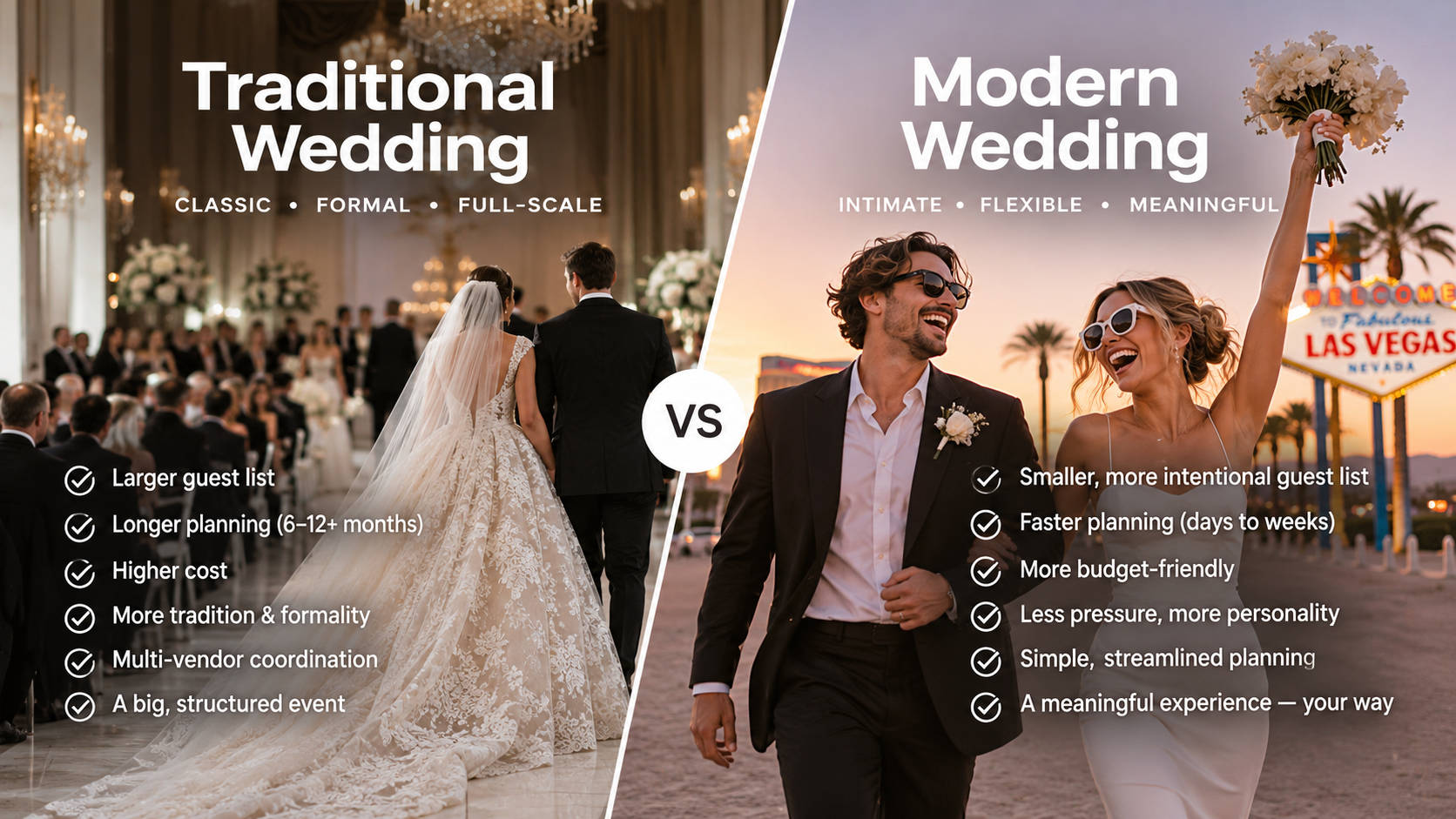
Weddings are changing. And it's not simply because couples want smaller celebrations, different venues, or more modern aesthetics.
It's because couples are rethinking what a wedding is supposed to look like in the first place.
For generations, the traditional wedding followed a familiar formula: a large guest list, a formal ceremony, a reception, a wedding party, a sit-down dinner, and a carefully planned schedule built around family expectations.
But in 2027, more couples are questioning that formula.
They want celebrations that feel personal, intentional, flexible, and meaningful. Some are choosing intimate weddings. Others are planning destination celebrations, courthouse ceremonies, or full-scale elopements.
The biggest difference between a modern wedding and a traditional wedding isn't the size of the celebration.
It's who gets to decide what the wedding looks like.
Let's explore what's actually different and why the modern wedding movement is changing the way couples celebrate.
1. The Purpose: Tradition vs. Personal Meaning
Traditional wedding: Following established expectations.
Traditional weddings often follow customs that have been passed down through generations. Couples may feel expected to have a particular ceremony, invite extended family, include specific traditions, and organize their celebration around established wedding conventions.
These traditions can be beautiful and meaningful. For many couples, they're an important part of celebrating their marriage.
Modern wedding: Creating your own experience.
Modern couples are increasingly asking different questions:
What does getting married actually mean to us?
Which traditions do we genuinely want to keep?
What would make this day feel like ours?
How do we celebrate without unnecessary pressure?
Instead of following a predetermined formula, modern couples build a wedding around their relationship, values, personalities, and priorities.
The result might be a destination wedding, an intimate ceremony, a weekend celebration, or an elopement in Las Vegas.
2. The Guest List: Everyone You Know vs. Your Favorite People
One of the most noticeable differences is the guest list.
Traditional weddings frequently involve large celebrations with extended family, friends, coworkers, and social connections.
Modern weddings often take a more intentional approach.
Some couples choose to celebrate with 10–30 of their closest people. Others decide to have a private ceremony with just the two of them.
This doesn't mean modern couples don't value their families or friends.
It means they want to be intentional about who shares their wedding experience.
The modern wedding mindset: You don't have to invite everyone to create a meaningful celebration.
3. The Venue: Traditional Venues vs. Experiences
Traditional weddings often take place in established wedding venues such as:
Churches and religious venues
Ballrooms and banquet halls
Country clubs
Hotels and traditional wedding venues
Modern weddings expand those possibilities.
Couples are exploring:
Destination weddings
Rooftop ceremonies
Desert landscapes
Unique wedding chapels
National parks and outdoor locations
Private properties and Airbnb-style venues where permitted
Courthouse weddings followed by a celebration
Las Vegas is a great example of this shift.
Couples can exchange vows in a stylish wedding chapel, celebrate in the desert, explore the Strip, or create an intimate experience that combines their ceremony with an unforgettable destination.
The venue becomes part of the experience rather than simply a place to host a wedding.
4. The Timeline: Structured Schedules vs. Flexible Experiences
Traditional weddings often follow a detailed timeline:
Getting ready
First look
Wedding party photos
Ceremony
Cocktail hour
Reception entrance
Dinner
Speeches
First dance
Cake cutting and celebration
Modern weddings can include some of these traditions, but they aren't necessarily required.
An elopement might look completely different:
Getting ready together.
Exploring a favorite destination.
Exchanging vows in an intimate setting.
Taking photos around the city.
Celebrating with champagne.
Enjoying dinner at a favorite restaurant.
There is no requirement to fill an entire day with scheduled activities.
Modern couples can build a timeline around what they actually enjoy.
5. Wedding Attire: Traditional Dress Codes vs. Personal Style
Traditional weddings often follow established fashion expectations.
Think formal bridal gowns, tuxedos, coordinated wedding parties, and specific dress codes.
Modern weddings offer more freedom.
Couples are experimenting with:
Minimalist wedding dresses
Short bridal dresses
Two-piece bridal outfits
Colorful wedding attire
Contemporary suits
Vintage-inspired fashion
Multiple outfit changes
Some couples want a timeless, traditional look. Others want something editorial, unconventional, or completely unique.
The important difference is that personal style takes priority over expectations.
6. The Budget: Paying for Expectations vs. Prioritizing Experiences
A traditional wedding can involve many expenses, including:
Venue rental
Catering
Wedding planner
Photography and videography
Flowers and decorations
Entertainment
Wedding attire
Transportation
Guest accommodations
Modern weddings can reduce or redistribute some of these expenses.
Instead of spending money on a large guest list and elaborate reception, couples might prioritize:
A destination experience
Wedding photography and films
A beautiful ceremony location
A special dinner
Travel and accommodations
Experiences they'll remember together
However, modern doesn't automatically mean inexpensive.
A luxury destination wedding or intimate celebration can still be a significant investment.
The difference is how couples choose to allocate their budget.
The goal isn't necessarily to spend less. It's to spend intentionally.
7. Wedding Photography: Formal Poses vs. Storytelling
Wedding photography is also evolving.
Traditional wedding photography often emphasizes formal portraits, family group photos, and carefully directed moments.
These photographs remain important and timeless.
Modern wedding storytelling adds another dimension.
Couples increasingly want their wedding documented as an experience, not just a collection of portraits.
That includes:
Candid moments
Behind-the-scenes footage
Getting-ready content
Documentary-style storytelling
Film-inspired photography
Super 8-inspired wedding films
Vertical social media content
Short-form video highlights
This is where the Film Wedding Content Creator (FWCC) category comes into the picture.
A Film Wedding Content Creator combines modern wedding storytelling with photography, film-inspired visuals, and social-first content.
Rather than focusing exclusively on traditional wedding documentation, the experience captures how the wedding actually felt.
At SmoothyPrime, this philosophy is at the center of what we do.
We believe couples should be able to relive their wedding through beautiful imagery, authentic moments, and film-inspired storytelling without making their wedding day feel like a production.
8. The Celebration: Following the Wedding Formula vs. Creating Your Own Traditions
Traditional weddings often include established reception traditions:
First dances
Wedding speeches
Bouquet tosses
Cake cutting
Grand entrances
Formal dinners
Modern couples can keep these traditions or replace them with something more personal.
Maybe it's a champagne toast in the desert.
Maybe it's a private dinner with close friends.
Maybe it's a spontaneous trip down the Las Vegas Strip after exchanging vows.
Or maybe it's simply spending the day together without a packed schedule.
The modern wedding isn't about rejecting every tradition.
It's about keeping the traditions that mean something and letting go of the ones that don't.
9. Modern Weddings Are Not Just Smaller Traditional Weddings
This is probably the biggest misconception about modern weddings.
A modern wedding isn't necessarily a traditional wedding with fewer guests.
It's a different approach to designing the experience.
A couple could invite 150 guests and still have a modern wedding if the celebration reflects their personalities and values.
Another couple could invite just two people and have a traditional ceremony.
The distinction isn't determined by the guest count.
It's determined by the intention behind the celebration.
Modern couples aren't necessarily looking for a smaller wedding.
They're looking for a wedding with less obligation and more meaning.
10. Why Las Vegas Is Perfect for the Modern Wedding Movement
Las Vegas has become an exciting destination for couples who want something different.
It offers flexibility, variety, and the opportunity to create a wedding experience that doesn't have to follow traditional expectations.
Couples can choose from:
Iconic Las Vegas wedding chapels
Scenic desert locations
Luxury hotels and resorts
Rooftop venues
Unique downtown experiences
Intimate ceremonies
Destination wedding celebrations
Another advantage is convenience.
Couples can often combine their ceremony, photography, celebration, and honeymoon experience into one destination.
Whether you're planning a spontaneous elopement or an intimate destination wedding, Las Vegas offers plenty of ways to make the day your own.
And that's exactly what modern weddings are about.
So, Which Is Better: Modern or Traditional Weddings?
Neither is inherently better.
Traditional weddings offer meaningful customs, family connections, and timeless experiences.
Modern weddings offer flexibility, personalization, and freedom from unnecessary expectations.
Some couples want a beautiful traditional ceremony followed by a modern reception.
Others want a private elopement with no wedding party, no seating chart, and no complicated timeline.
You can also combine both approaches.
Keep the traditions that matter to you. Change the ones that don't.
The best wedding isn't the one that follows the most rules.
It's the one that feels most like you.
Welcome to the Modern Couple Movement
At SmoothyPrime, we believe getting married should feel like the beginning of your story, not a checklist of expectations.
We're here to help modern couples plan, experience, and relive their Las Vegas elopement through modern photography, film-inspired storytelling, and a more intentional approach to weddings.
Whether you're planning an intimate ceremony, a destination wedding, or an elopement in Las Vegas, your wedding should reflect your relationship.
Less obligation. More meaning. More freedom.
Explore the SmoothyPrime Planning Hub and start creating a wedding experience that feels like yours.
Plan your Las Vegas elopement with SmoothyPrime.
